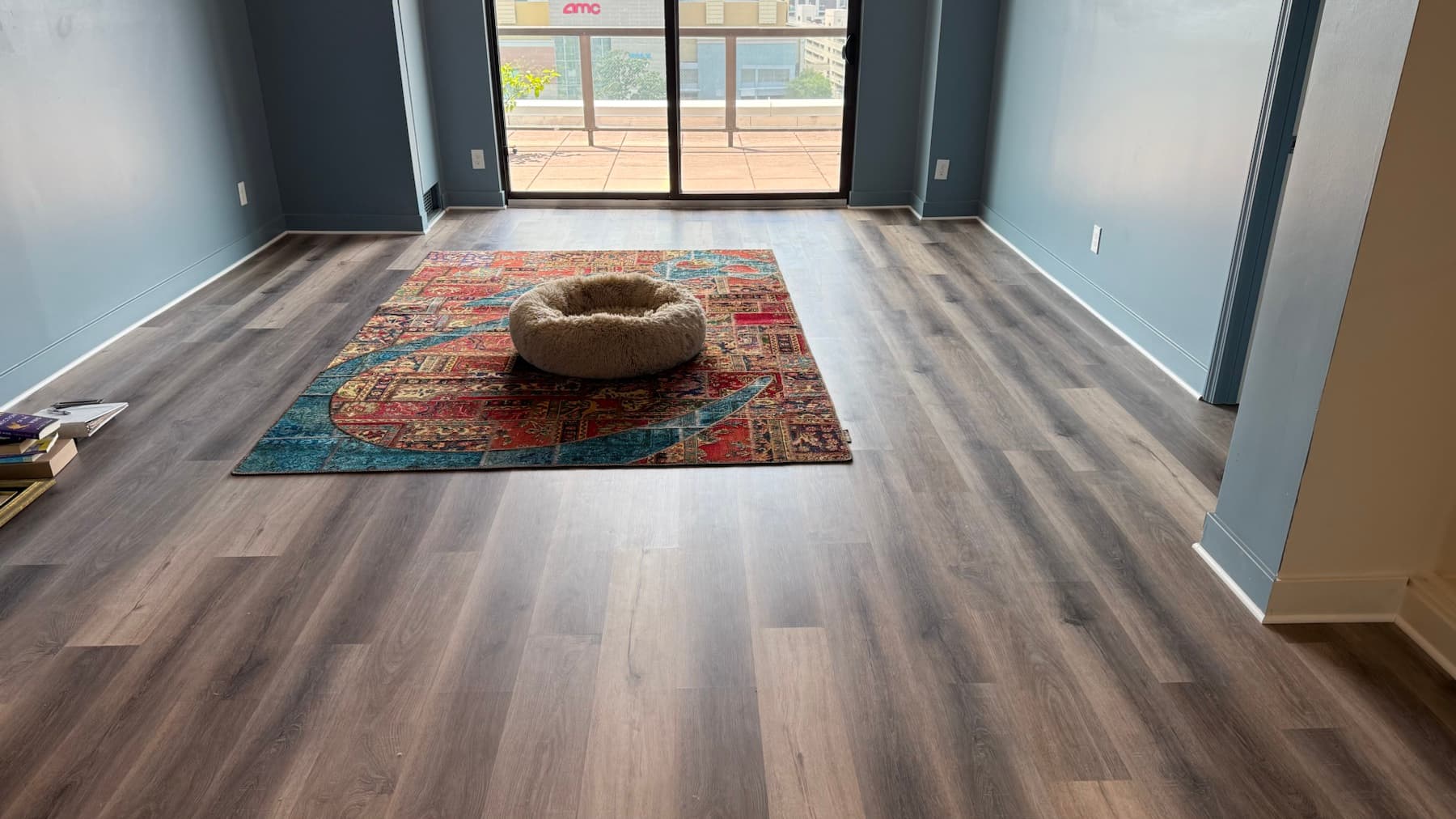
Choosing LVP for Condos and Multi-Unit Properties: 7 Specs That Matter
· 9 min read

Luxury vinyl plank is a common option for condos, apartments, townhomes, and rental renovations because it can combine a wood look with straightforward maintenance and products designed for demanding traffic. But "LVP" is a category, not a quality grade—and two planks that look similar can have very different warranties, acoustic test results, cores, and installation requirements.
For a multi-unit project, the right question is not simply, "Is LVP good?" It is: does this exact product and floor assembly fit the unit, the building rules, the expected traffic, and the maintenance plan? These are the seven specifications worth checking before you order.
1. Wear layer and surface finish
The wear layer is the clear protective film above the printed wood visual. It is measured in mils, not millimeters, and it helps the floor resist everyday surface wear. The surface coating and texture matter too: two products with the same wear-layer thickness can behave differently when exposed to grit, chair movement, pets, or rolling loads.
Do not translate "scratch-resistant" into "scratch-proof." Furniture pads, entry mats, clean casters, and correct maintenance still matter. For a deeper comparison, read our guides to 20 mil vs. 22 mil wear layers and what scratch resistance really means.
- Ask for the wear layer in mils and the total plank thickness in millimeters—they measure different things.
- Confirm whether the warranty covers the project's actual use: residential, multifamily, light commercial, or commercial.
- Check the surface-finish documentation, not only the number printed on a display label.
2. The warranty's use classification
A long residential warranty does not automatically cover a leased unit, common corridor, leasing office, or other non-owner-occupied space. Manufacturers define residential, multifamily, light-commercial, and commercial use differently, so the application listed in the warranty matters more than the largest year printed on the brochure.
Before purchasing, match each area to the written warranty. A private condo living room, rental unit, lobby, stair landing, and rolling-office-chair area may not belong in the same category. Keep the product data sheet, warranty, batch information, and invoice with the property records.
3. Acoustic performance for the full assembly
In a building with another unit below, sound is a system issue. IIC and STC results depend on the structural slab or joists, the ceiling below, underlayment, and flooring tested together. An attached pad can help, but a high marketing number from a different test assembly does not guarantee approval in your building.
Get the condo or HOA requirement in writing before selecting the floor. Then compare it with a test report for a reasonably similar assembly and confirm whether the board requires a particular underlayment or approval form. Our condo sound-rating guide explains the sequence in detail. Manufacturer guidance for multifamily projects likewise treats the floor, underlayment, subfloor, and ceiling as a combined acoustic assembly.
4. Water performance—and its limits
Many rigid-core LVP products have a core that does not swell from ordinary topical moisture. That can make them useful in kitchens, entries, laundry areas, and busy living spaces. It does not turn a floating installation into a sealed bathtub: water can still reach the subfloor at edges, penetrations, or seams, and leaks must be addressed promptly.
Confirm the product's exact warranty language, approved rooms, cleaning instructions, and whether moisture testing is required. Our article on waterproof LVP and plank seams covers the distinction between a waterproof plank and a waterproof floor system.
5. Core, installation method, and expected loads
Rigid-core click LVP and glue-down LVT solve different problems. A floating rigid-core floor can install efficiently and allows individual boards to lock together without adhesive. Glue-down products may be preferred for certain rolling loads, large continuous areas, or commercial maintenance plans. Neither method is universally better.
The installer should account for room size, transitions, fixed cabinets, direct sunlight, rolling loads, heavy furniture, and the manufacturer's expansion requirements. Product-specific instructions control; a method that works in one apartment may be wrong for a corridor or amenity space.
6. Subfloor flatness and moisture
LVP is thin enough that the surface below it matters. High spots, low spots, loose underlayment, cracked patches, or moisture can lead to movement, joint stress, telegraphing, or installation failure. A rigid plank may bridge small variations, but it is not a substitute for measuring and preparing the subfloor.
For concrete, identify the manufacturer's moisture limits and approved test method. For wood assemblies, check movement, damage, fasteners, and flatness. Read our subfloor flatness and moisture checklist before the installation date.
7. Replacement-plank and turnover planning
Multi-unit owners should plan for repair before the first plank is installed. Color runs and product lines change. Saving labeled attic stock from the original batch can make a future localized repair far easier than trying to match a discontinued floor years later.
Ask how damaged planks are replaced in the chosen installation method, keep several unopened cartons where storage conditions are suitable, and document the color, lot, product code, and installation date. Also give residents or maintenance teams the approved cleaning instructions—using the wrong cleaner can create haze or damage that no wear-layer number prevents.
A practical pre-purchase checklist
Before approving a product, collect the technical documents for that exact SKU—not a generic brochure for the collection. A careful comparison now is cheaper than a rejected HOA application, a warranty dispute, or an early replacement.
- Written building or HOA flooring requirements, including acoustic documentation
- Product data sheet, installation instructions, and warranty for the intended use
- Wear layer, total thickness, core type, surface finish, and attached-pad details
- Subfloor and moisture assessment for the actual unit
- Installation method and transition plan
- Approved cleaning procedure and replacement-plank storage plan
See the floor in your space before deciding
A specification sheet narrows the options, but light, wall color, cabinetry, and room size determine how a floor actually looks at home. Partek Floors offers a free, no-pressure consultation. When you are ready, we can bring samples, measure the space, confirm project-specific product availability and specifications, and provide an on-site estimate.
We serve Maryland, Washington DC, and Northern Virginia. Request your consultation or start with our complete LVP guide.
Frequently asked questions
+ Is LVP a good choice for apartments and condos?
It can be. LVP is available in products designed for demanding traffic, moisture-prone rooms, and straightforward maintenance. The correct choice still depends on the product warranty, the building's acoustic rules, the subfloor, and the installation method.
+ What wear layer should a multi-unit property use?
There is no universal number for every project. Start with the manufacturer's written use classification and warranty, then evaluate traffic, surface finish, cleaning plan, rolling loads, and replacement strategy. Do not choose by wear-layer thickness alone.
+ Does attached pad guarantee condo sound compliance?
No. Sound ratings apply to the full tested floor-and-ceiling assembly. The same plank can produce different results over concrete and wood structures. Compare the building's written requirement with a relevant assembly test before purchasing.
+ Is LVP completely waterproof in a multi-unit building?
A product may have a waterproof core, but a floating floor is not a sealed waterproof membrane. Water can reach the subfloor around seams, edges, and penetrations, so leaks and standing water still require prompt attention.
+ Should a property owner keep extra LVP after installation?
Yes. Keep labeled attic stock from the same product and lot when possible. Product lines and color runs change, and matching a discontinued floor later can be difficult.