LVP vs. Laminate Flooring: The Difference Is What's Inside the Plank
· 5 min read
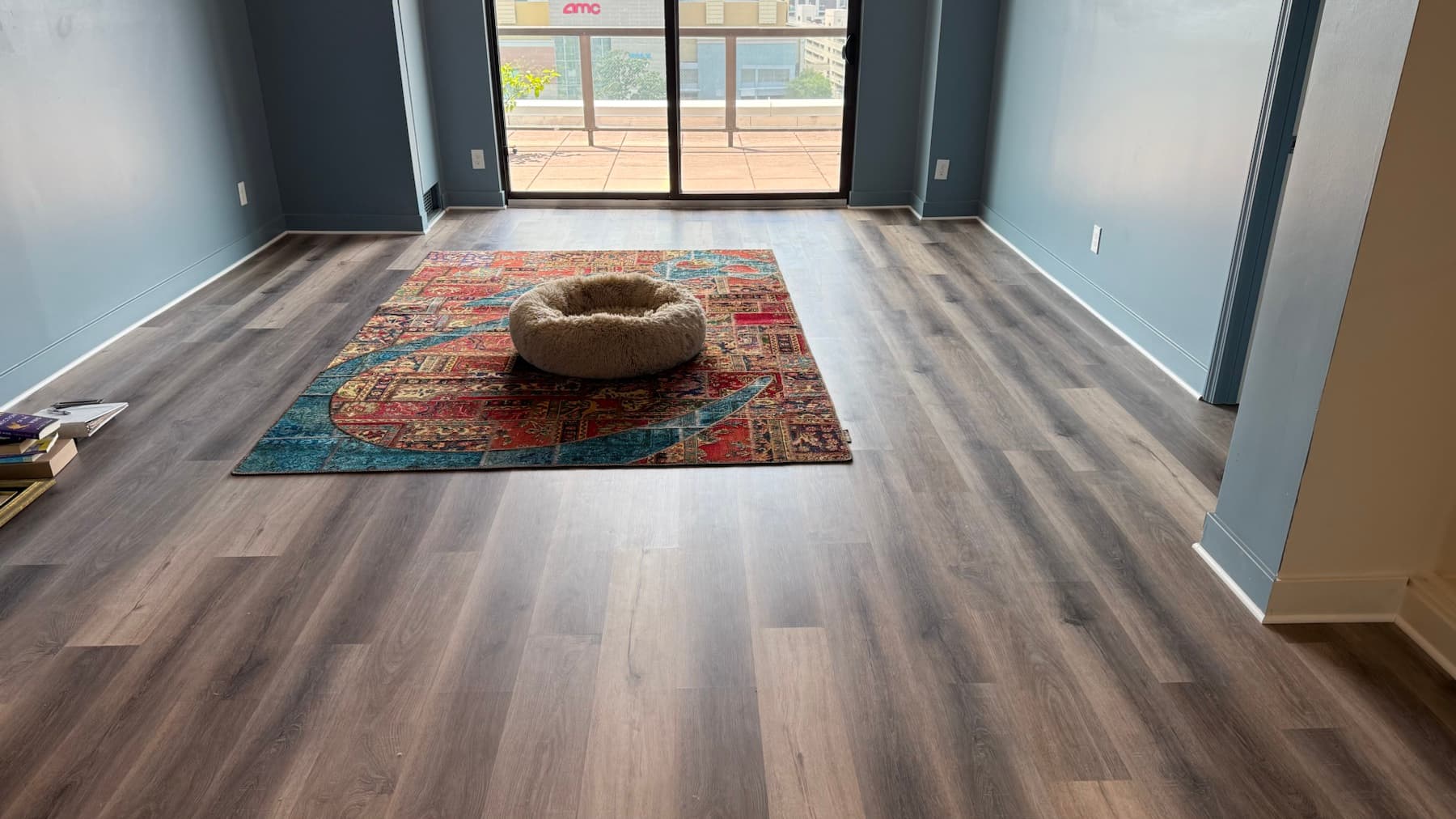
Walk past a sample board of laminate and one of luxury vinyl plank and you may not be able to tell them apart. Both can carry a convincing wood-look print, both click together, and both are far less expensive than solid hardwood.
The difference is inside. It shows up the first time something spills, the first time a chair gets dragged, or the first time a plank needs to be replaced. Here is how to compare them honestly.
What each floor is made of
Laminate is built on a wood-fiber core, usually high-density fiberboard, with a printed layer and a hard clear surface on top. Rigid-core LVP is built on a stone-plastic composite core with a printed vinyl layer and a clear wear layer. The wood look on both is a photograph of wood, not wood.
That one difference in the core drives most of what follows. If you want the full background, our guide on what luxury vinyl plank is covers the layers.
Water is where they separate
A wood-fiber core takes on moisture. When water reaches the edge of a laminate plank, the core can swell, the edges can lift, and the damage usually does not reverse. A stone-plastic core does not absorb water, so a spill, a pet accident, or a damp mop does not swell the plank.
That does not make a floating floor a sealed pan. Standing water can still travel through seams to the subfloor, which we explain in is waterproof LVP waterproof at the seams. But for the everyday splash zones, such as kitchens, entries, laundry rooms, and the bathroom, the core material matters.
Scratches, dents, and daily wear
Laminate has a very hard surface, and that is a real strength against fine scratches. The tradeoff is that a hard surface can chip along an edge or a corner when something heavy lands on it, and a chip exposes the fiber core underneath.
LVP has a softer, slightly flexible surface. It resists chipping and can feel less harsh underfoot, but a sharp, loaded drag can still gouge it. Neither floor is scratch-proof; the practical habits are the same, and we list them in is LVP scratch-resistant. Partek's documented plank has a 20-mil wear layer; see what the wear layer number means.
Sound and feel underfoot
Laminate floating floors are often described as hollow or clicky, particularly in upstairs rooms, because the rigid board resonates. Vinyl tends to feel a little quieter and softer. Partek's documented plank includes an attached sound-insulation layer, but we do not publish a numeric sound rating, and building rules for condos vary. Read quiet flooring and condo sound requirements before you assume either floor will pass.
Repairs and the subfloor
Both floors are made of individual planks, so a damaged one can sometimes be replaced. Whether that is practical depends on the layout, how the planks lock, and whether spare planks from the same run are on hand. Water-damaged laminate is more likely to need several planks replaced, because the swelling spreads along the edges.
Both also need a flat, clean, dry subfloor. Neither hides a bad one; see how to check subfloor flatness and moisture.
A quick way to decide
Use these as rules of thumb, not guarantees:
- Choose LVP for kitchens, entries, laundry rooms, basements, and homes with pets or children, where moisture is a realistic risk.
- Laminate can make sense in a dry bedroom or office where you want a hard surface and the room has no history of leaks.
- If a quote for either floor is silent on subfloor prep and transitions, ask about it before comparing prices.
- Compare the actual product spec, not the category. Quality varies in both.
See it in your own rooms
The fastest way to settle the question is to look at the rooms you are covering. Book a free in-home measure and we will check the subfloor, the water sources, and the transitions. Prefer to browse first? Compare all 16 colors.
Frequently asked questions
+ Is laminate waterproof?
Standard laminate has a wood-fiber core that can swell when water reaches it, so it is generally considered water-resistant at best. Rigid-core LVP has a core that does not absorb water.
+ Can LVP go over existing laminate?
Sometimes, if the laminate is flat, stable, and dry. Damaged or swollen laminate usually needs to come out. We check this at the measure before recommending it.
+ Which one is cheaper?
Pricing varies by product, room, and prep. We do not quote a price in an article; a free in-home measure gives you a number based on your floor.