Is LVP Really Scratch-Resistant? An Honest Answer
· 7 min read
Every flooring company on earth will tell you their floor is scratch-resistant. Almost none of them will tell you what that means, and the gap between *resistant* and *proof* is where disappointed customers live.
So here's the honest version: no floor is scratch-proof. Not hardwood, not tile, not laminate, not LVP, not the expensive one. What varies is how much abuse it takes to leave a mark, and — this is the part nobody mentions — how visible that mark is when it happens. Those are two different properties, and the second one is why two floors with identical specs can age completely differently.
The thing that actually scratches your floor isn't your dog
Ask a homeowner what will scratch their new floor and they'll say the dog. Ask an installer and they'll say grit.
The dominant cause of the fine surface scratching that dulls a floor over years is abrasive particles tracked in on shoes — sand, road salt, small stones, the mineral grit that lives in every driveway and sidewalk in the DMV. It gets underfoot and gets ground across the surface thousands of times a day. That's not a dramatic event, which is why nobody blames it. It's sandpaper, applied slowly.
Dog nails do scratch floors, but they're a distant second for most households, and a well-specified floor handles them. The dramatic gouges people fear usually come from a specific event: a dining chair dragged instead of lifted, an appliance walked across the room on its corners, a bit of gravel wedged in a shoe heel.
This matters because it changes what protects you. If grit is the enemy, then a doormat and a regular sweep do more for your floor than any spec on the sheet.
Four things decide how a floor ages
When we look at why one floor still looks good at year five and an identical-spec floor looks tired, it comes down to these:
- Wear layer thickness. The clear film on top. A 20-mil commercial-grade layer takes far more abrasion than the 6–12 mil common in builder-grade plank. See our breakdown of what a wear layer actually is.
- Surface hardness. Not all wear layers are the same material. A urethane- or ceramic-reinforced surface resists scuffing better than a bare vinyl film of the same thickness.
- Sheen. This is the underrated one. A glossy floor reflects light uniformly, so any scratch that breaks that uniformity lights up. A low-sheen matte floor scatters light already, and hides the same scratch almost completely.
- Texture. Embossed grain does the same job as matte sheen — it breaks up the surface so a fine scratch has nothing uniform to interrupt.
Why matte and textured floors win the long game
Two floors, same 20-mil wear layer, same core. One is glossy and smooth; one is matte and embossed. Put them both through five years of a family with a labrador. They'll have accumulated a nearly identical number of micro-scratches.
The glossy one will look worn. The matte one will look fine.
Nothing about the durability differed — only the visibility. This is the single most useful thing to understand when you're standing in a showroom, because gloss photographs beautifully and ages badly. The floor that looks most impressive under showroom lighting is often the one that will disappoint you first.
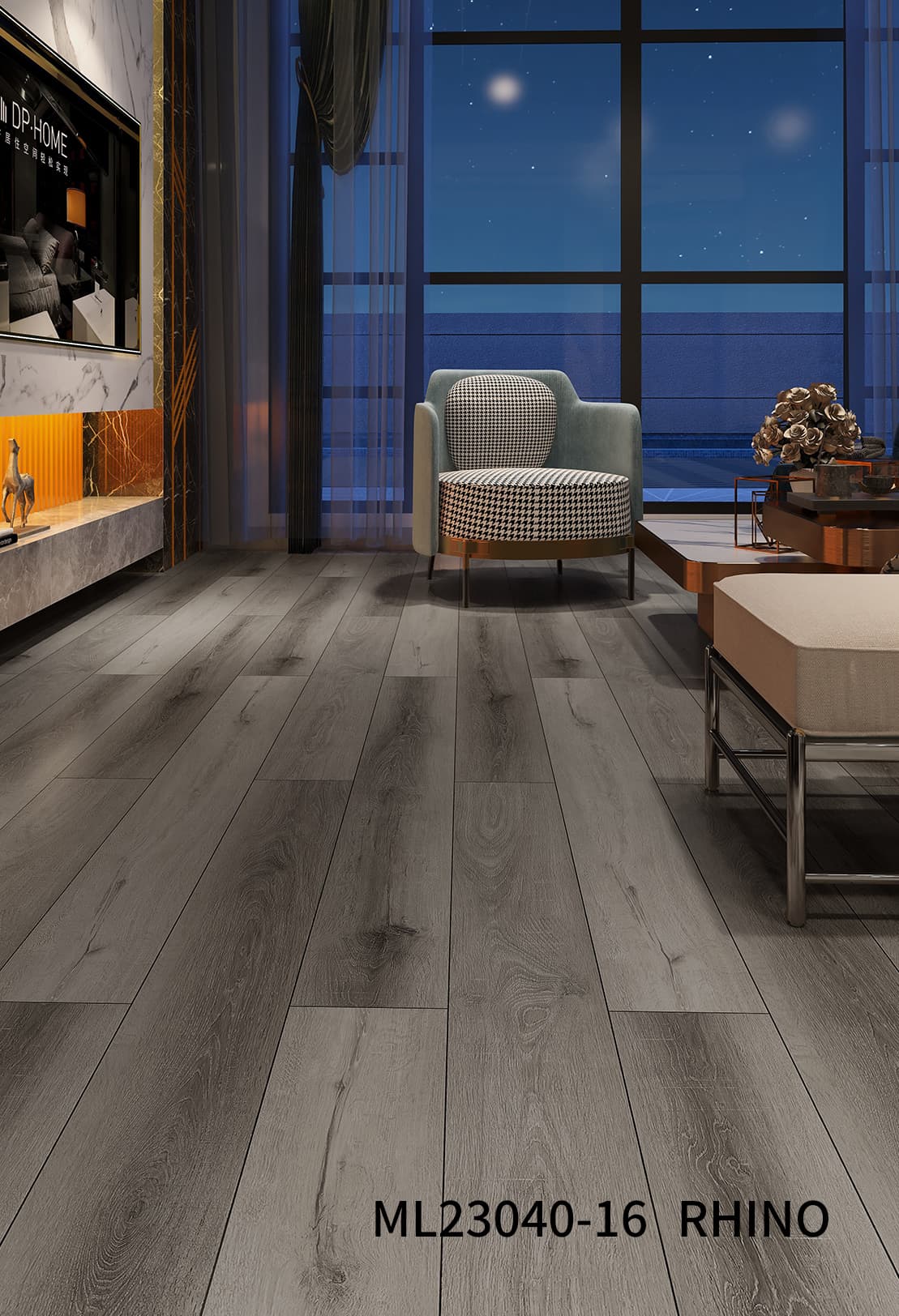
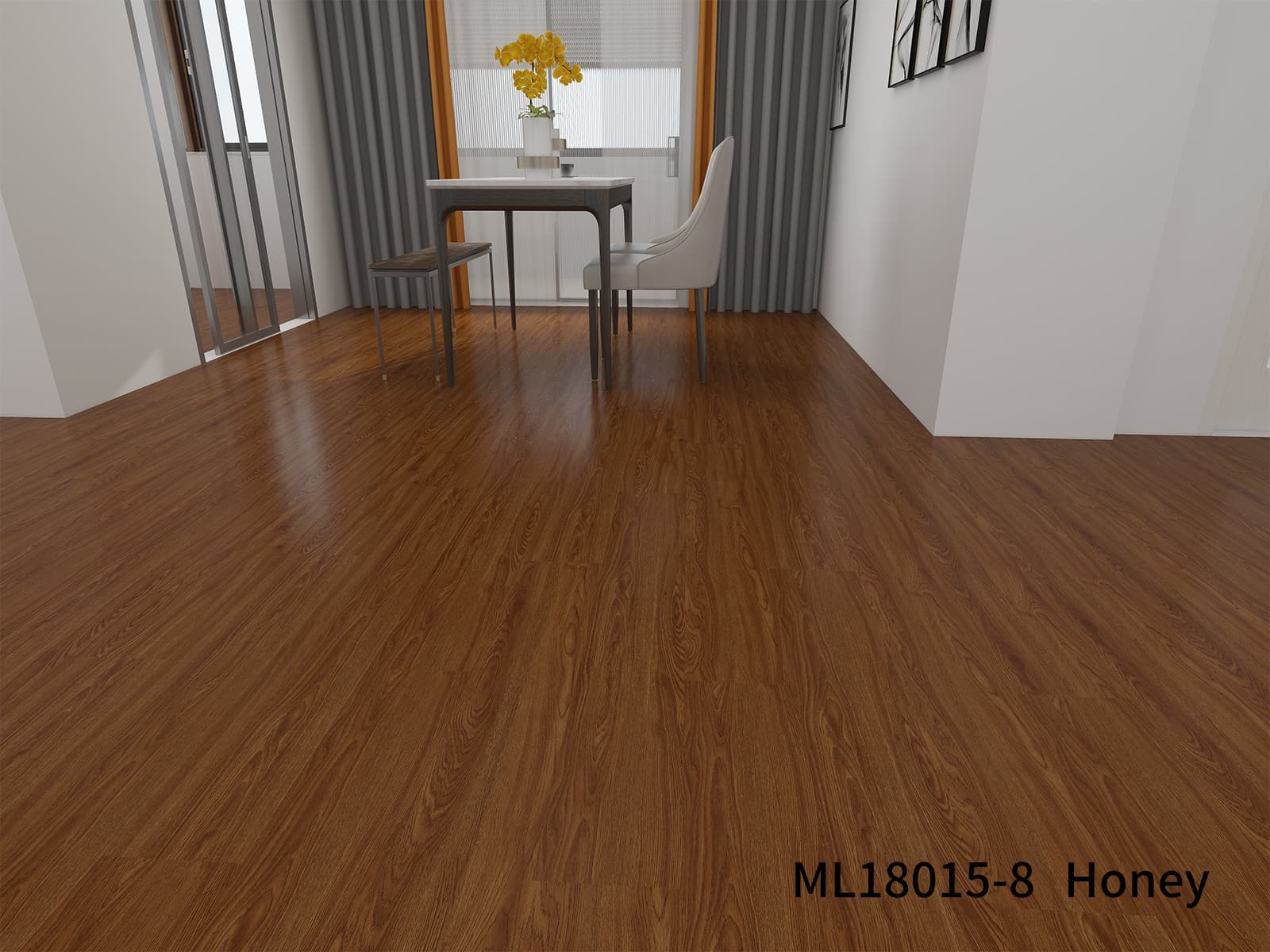
Every Partek colorway is a low-sheen, embossed surface for exactly this reason. It's not an aesthetic preference — it's a decision about what the floor looks like in year five.
What LVP genuinely resists well — and where it doesn't
Rigid-core LVP is genuinely strong against the things that ruin other floors. It's fully waterproof, so the spill that would cup a hardwood board does nothing. It doesn't dent from foot traffic the way softer flexible vinyl does, because the stone core underneath doesn't give. It shrugs off the pet accidents and dropped toys that make people nervous.
Where it's honestly weaker: a sharp, concentrated drag under load. Dragging a loaded bookshelf across the room can put a gouge through the wear layer into the print. No consumer floor survives that — hardwood would gouge too, it would just be refinishable afterward.
And that's the real trade. Hardwood can be sanded back; LVP can't. But LVP is installed as individual planks, so a damaged board can be swapped out on its own in under an hour, without sanding, staining, or vacating the room for three days. Different answer to the same problem, and for most households a better one.
How to actually keep it looking new
None of this is demanding. It's just consistent:
- Mats at every exterior door. The single highest-leverage thing you can do. Stop the grit at the threshold and you've solved most of the problem.
- Felt pads under every furniture leg, and re-check them once a year — they wear down and fall off, and a bare metal leg on a naked pad is a gouge waiting to happen.
- Sweep or vacuum regularly (hard-floor setting, no beater bar). You're removing abrasive, not dirt.
- Lift furniture, don't drag it. Boring advice; prevents the one failure mode that actually matters.
- Hard casters are the enemy. Swap office-chair casters for soft rubber, or put down a mat.
- Our full LVP care guide covers cleaning products and the ones that quietly damage the finish.
Frequently asked questions
+ Will dog nails scratch luxury vinyl plank?
A commercial-grade 20-mil wear layer over a rigid core handles dog nails well — it's one of the reasons LVP has become the default for households with pets. Keeping nails trimmed helps, but the bigger risk to any floor is abrasive grit tracked in from outside, not the dog itself.
+ Can scratches in LVP be repaired?
Fine surface scuffing often becomes invisible on a matte, textured floor and doesn't need repair. Deeper scratches can't be sanded out the way hardwood can — but because LVP is laid as individual planks, a damaged board can be replaced on its own without redoing the floor. That's usually a job of well under an hour.
+ Is LVP more scratch-resistant than hardwood or laminate?
Against everyday abrasion, a 20-mil rigid-core LVP generally outperforms site-finished hardwood, which is why it's specified for commercial spaces. Laminate can have a very hard surface but fails badly with water. The honest comparison is in our guide on LVP vs hardwood in the DC area.
+ Does a matte finish really hide scratches better?
Yes, and it's one of the most practical things to know when choosing. A scratch is visible because it interrupts how light reflects off the surface. A glossy floor reflects uniformly, so the interruption stands out. A matte, embossed floor already scatters light, so the same scratch largely disappears.
+ What's the worst thing for an LVP floor?
Dragging heavy furniture without lifting it, and skipping doormats. One causes the deep gouges that require a plank swap; the other causes the slow, even dulling that makes a floor look old without any single thing having gone wrong.