How Lighting Changes the Color of LVP (and How to Test Samples at Home)
· 5 min read

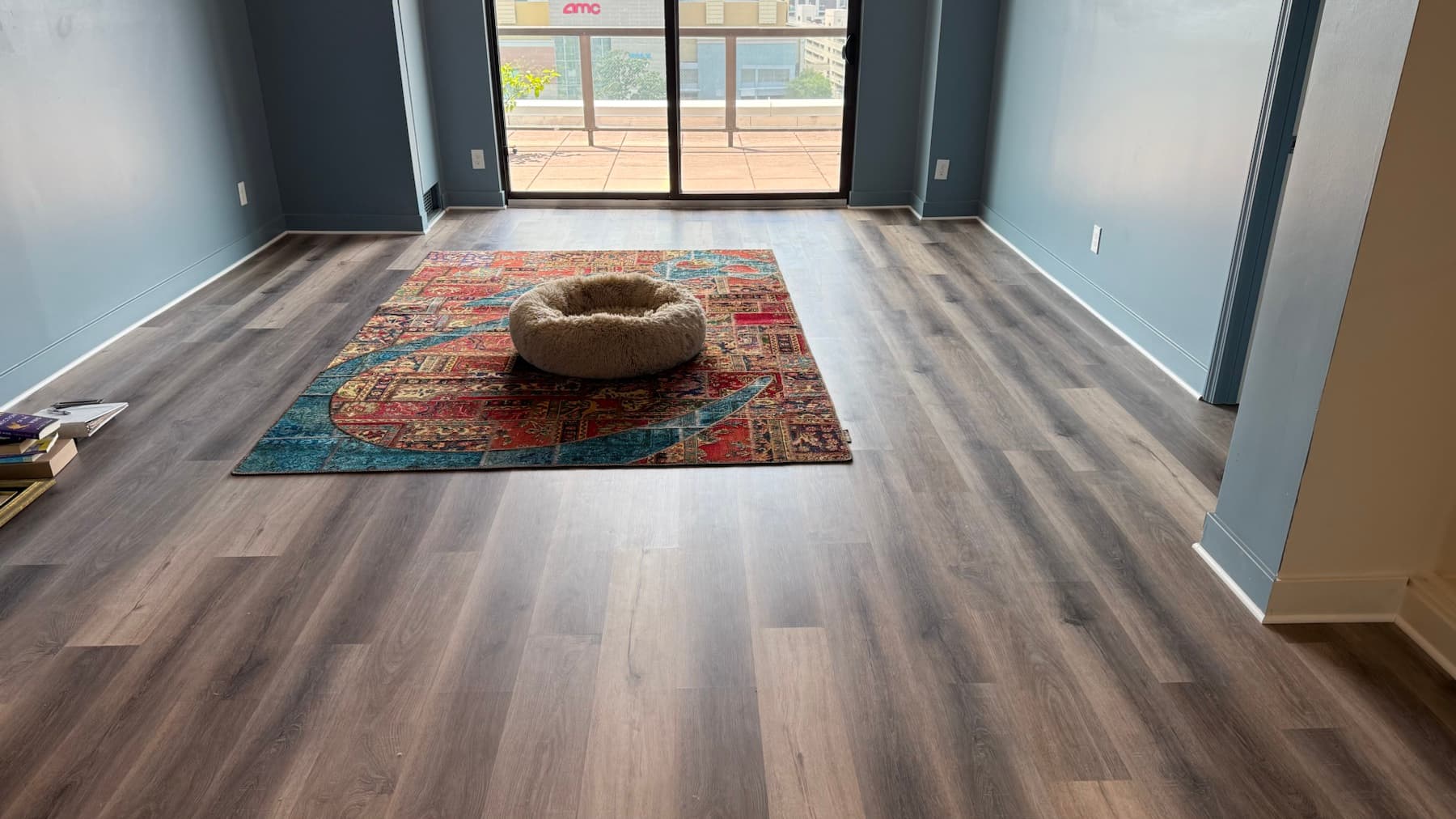
Floor color is not a fixed number. The same plank can look golden at noon, flat and gray on a cloudy morning, and a shade darker under warm evening lamps. Photos and screens add one more layer of difference on top.
That is why many homeowners feel unsure after choosing from a small sample or a website image. Understanding what changes the look of a floor lets you test it properly and choose with confidence.
Window direction changes the color you see
Natural light is the biggest variable. Rooms with south-facing windows tend to get warmer, brighter light for much of the day, which can bring out the yellow or amber in a plank. North-facing rooms usually get cooler, softer light, which can make the same plank look grayer or more muted.
East and west rooms swing through the day, bright and warm at one end and dimmer at the other. If a room is used mostly in the evening, judge the floor in the evening, not only at midday.
Bulb color matters more than most people expect
Warm bulbs add yellow and make wood tones look richer. Cool, bluish bulbs pull a floor toward gray and can make warm browns look flat. Mixed bulbs in one room, a common situation, can make the floor look slightly different from corner to corner.
- Check what bulb type and color temperature each room uses now.
- If you plan to change bulbs, change them before judging the floor.
- Look at the floor with the lights you use most, not just with the overheads.
Walls, cabinets, and furniture shift the floor too
A floor is judged against what surrounds it. A light plank next to warm white walls can look creamy; the same plank beside cool gray walls can look cleaner and more neutral. Dark cabinets make a floor seem lighter by contrast, and large rugs or sofas change how much of it you notice at all.
Bring your samples next to your trim, cabinet doors, and a wall paint chip. The floor should look right with those, since they stay.
Light and dark floors behave differently
Light floors tend to open up a smaller or darker room, but they can read pale or washed out in strong sun. Darker floors add depth and contrast, but in a room with little daylight they can feel heavy. Medium tones are often the most forgiving across different light conditions.
Dark and light surfaces also show different kinds of everyday marks, so lighting is only one piece. Our article on keeping LVP from looking scratched covers how finish and tone affect what you notice.
A simple way to test samples at home
Spend a day with the samples before committing:
- Lay each sample flat on the floor, not propped against a wall.
- Look at it in the morning, midday, and evening, and with the lights on at night.
- View it from standing height and from across the room.
- Compare two or three finalists side by side rather than one at a time.
- Check it next to your trim, cabinets, and a paint chip.
Light can also affect how a floor ages
Strong direct sun is a separate question from color perception. If a room gets hours of intense sun through large windows, it is worth reading whether LVP fades in sunlight and considering window treatments.
Make the decision in your own home
Product photos are a good way to narrow the field, and our colors page shows all 16 verified colors in styled rooms. Treat them as a starting point, since screens and room settings vary.
The most reliable test is the one in your own light. Book a free in-home measure and we can discuss samples for your rooms, or compare all 16 colors first to build a short list.
Frequently asked questions
+ Why does my LVP sample look different from the website photo?
Screens, camera settings, and the styled room in a photo all affect color. Use the website to narrow your choices, then check samples in your own home.
+ Should I choose a color based on one room's light?
If the floor will run through several rooms, check it in the brightest and darkest of them. A continuous floor looks different from room to room as the light changes.
+ What time of day is best to judge a floor color?
Look at more than one time. Judge it when you use the room most, and again at night under your normal lamps.